
How to Revive a Dead Lawn Naturally
A dead or badly damaged lawn can make an otherwise well-kept home look neglected. The good news is that you may not need expensive lawn treatments or harsh chemicals to bring it back.
Learning how to revive a dead lawn naturally starts with working out why the grass has died. Lack of water, compacted soil, poor drainage, excessive shade, mowing problems, pests and depleted soil can all leave a lawn thin, brown or completely bare.
In many cases, the grass is not actually dead. It may simply be dormant or severely stressed.
This guide explains how to assess your lawn, improve the soil naturally, encourage new growth and know when reseeding or replacing sections is the better option.
Is Your Lawn Actually Dead?
Before doing anything, check whether the grass is genuinely dead.
Brown grass does not necessarily mean dead grass. Some lawn varieties turn brown during periods of heat or drought and recover when conditions improve.
Try the tug test.
Gently pull on a handful of grass. If the plants resist and the crowns near the soil are still showing signs of life, there may be a good chance the lawn can recover.
If the grass pulls away easily, feels completely dry and brittle, and the roots are brown and lifeless, that section may be dead.
Look closely at the soil too.
If it is hard, dusty and compacted, the problem may not simply be lack of water. The grass may have struggled because its roots could not access enough air, water or nutrients.
Why Lawns Die
Understanding the cause is more important than simply watering a dead-looking lawn.
Common causes include:
- Extended periods without enough water
- Extreme heat
- Compacted soil
- Poor drainage
- Excessive foot traffic
- Mowing the grass too short
- Too much shade
- Nutrient-poor soil
- Lawn pests
- Fungal problems
- Competition from weeds
- Incorrect watering
- Soil that has become hydrophobic
If you fix only the symptoms, the lawn may deteriorate again.
For example, adding more water to a lawn with poor drainage can make the situation worse.

How to Revive a Dead Lawn Naturally
1. Remove Dead Material
Start by cleaning up the damaged area.
Rake away dead leaves, excessive thatch and loose brown grass. Don’t aggressively strip a lawn that still has living plants underneath.
A flexible garden rake is useful because it can remove debris while disturbing the soil surface enough to expose areas where new growth may develop.
If an area is completely bare, remove obvious dead vegetation and weeds before preparing the soil.
The goal is to give new grass access to sunlight, moisture and soil.
2. Test the Soil
Healthy grass depends heavily on healthy soil.
If your lawn repeatedly struggles, consider having the soil tested rather than guessing what it needs.
A basic soil test can provide useful information about soil pH and nutrient levels.
This matters because adding fertiliser without knowing what the soil lacks can be wasteful and, in some situations, contribute to nutrient problems.
For a natural lawn-care approach, concentrate first on improving the condition of the soil.
3. Loosen Compacted Soil
Compacted soil is one of the most common reasons grass struggles.
Over time, walking, children playing, pets and even regular lawn maintenance can compress the soil. Water then has difficulty penetrating, while grass roots have less room to grow.
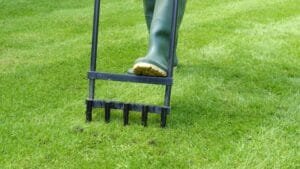
For small areas, use a garden fork to make holes throughout the compacted soil.
Push the fork several centimetres into the ground and gently rock it back and forth. Repeat this across the affected area.
For larger lawns, a core aerator can remove small plugs of soil and dramatically improve air and water movement.
Aeration is particularly useful when water tends to sit on the surface instead of soaking into the soil.
4. Improve the Soil Naturally
Adding organic matter can help improve poor soil over time.
A thin layer of good-quality compost can be worked gently into the surface of bare or struggling areas.
Compost can help improve soil structure and provide organic matter that supports healthy soil biology.
Don’t bury the grass under a thick layer.
For an established lawn, a light top-dressing is generally more appropriate than dumping large amounts of material over the existing grass.
If the soil is extremely poor, improving it may be more important than immediately applying more seed.
5. Water Deeply Rather Than Constantly
Watering is essential when reviving a lawn, but more water is not always better.
Frequent shallow watering can encourage shallow roots. Where conditions and local water restrictions allow, aim to encourage deeper root development by watering thoroughly rather than constantly sprinkling small amounts.
Water in the cooler part of the day to reduce unnecessary evaporation.
Early morning is often a good choice.
However, don’t create constantly wet conditions. If water remains on the surface for long periods, investigate drainage before increasing watering.
Australian lawns can face intense summer heat, so always consider local rainfall, soil type, grass variety and current water restrictions.
6. Reseed Bare Areas
If parts of the lawn are completely dead, reseeding may be necessary.
Choose grass seed suitable for your local climate, soil and amount of sunlight.
Don’t automatically buy the same seed your neighbour uses. Different grass varieties perform very differently.
Before sowing:
- Remove dead vegetation.
- Loosen the top layer of soil.
- Add a small amount of suitable compost if necessary.
- Level the surface.
- Spread the seed according to the product instructions.
- Gently press the seed into contact with the soil.
- Keep the surface consistently moist while the seed establishes.
Avoid allowing newly planted seed to completely dry out.
At the same time, don’t flood the area.
The objective is consistently moist soil rather than saturated soil.
7. Feed the Lawn Naturally
A lawn needs nutrients to produce healthy leaves and roots.
Organic matter such as well-made compost can be useful for improving soil health. Organic lawn fertilisers may also be suitable if your lawn needs additional nutrients.
However, natural does not automatically mean harmless in unlimited quantities.
Too much fertiliser can damage grass and contribute to nutrient runoff.
Follow the instructions for whatever product you use and avoid fertilising a severely stressed lawn during extreme heat unless the product specifically recommends it.
Sometimes improving watering, soil structure and mowing practices will do more for a struggling lawn than simply adding fertiliser.
8. Mow Correctly
Mowing can either help your lawn recover or make the problem worse.
One of the most common mistakes is cutting grass too short.
Scalping removes too much of the leaf surface that the plant needs for photosynthesis. It can also expose the soil to more heat and moisture loss.
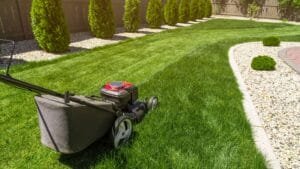
Keep the mower blades sharp and avoid removing excessive amounts of grass in a single mowing session.
A useful general rule is to avoid cutting more than about one-third of the grass height at once.
The ideal mowing height depends on the grass variety, season and local conditions.
During hot, dry weather, allowing suitable grass to remain slightly longer can help shade the soil and reduce moisture loss.
Natural Ways to Prevent the Lawn Dying Again
Reviving a lawn is only half the job.
You also need to prevent the original problem from returning.
Improve Soil Over Time
Continue adding appropriate organic matter and avoid unnecessary soil disturbance.
Healthy soil supports stronger root growth.
Reduce Compaction
Try to avoid repeatedly walking or parking on the same areas of lawn.
If one section receives heavy foot traffic, consider creating a pathway or another durable surface.
Water According to Conditions
Don’t automatically turn on the sprinkler every day.
Check the soil first.
If it is still moist below the surface, additional watering may not be necessary.
Don’t Mow Too Short
Raise the mower height during stressful weather where appropriate for your grass variety.
Deal With Shade
Grass needs sufficient sunlight.
If a lawn consistently struggles underneath dense trees or beside buildings, the problem may be a lack of sunlight rather than poor lawn care.
In these locations, consider whether a shade-tolerant grass variety or an alternative groundcover would be more appropriate.
Common Mistakes to Avoid
Overwatering
More water cannot compensate for poor drainage or compacted soil.
Overfertilising
Applying large amounts of fertiliser in the hope of producing faster growth can damage the lawn.
Mowing Immediately After Severe Stress
Give severely stressed grass time to recover before aggressively mowing it.
Ignoring Drainage
If water pools after rain, investigate why.
Using the Wrong Grass
A grass variety suited to one Australian climate may perform poorly in another.
Trying to Save Completely Dead Grass
If the roots and crowns are genuinely dead, endless watering will not bring them back.
Remove the dead material and establish new grass instead.
When Should You Replace the Lawn?
Sometimes starting again makes more sense.
Consider replacing sections when:
- The grass is completely dead.
- Large areas are bare.
- The soil is severely degraded.
- The existing grass variety is unsuitable for the location.
- Persistent pests or disease have destroyed the lawn.
- The area receives too little sunlight for the existing grass.
You don’t necessarily have to replace the entire lawn.
Repairing smaller damaged sections can be considerably cheaper and less disruptive.
How Long Does It Take to Revive a Lawn Naturally?
There is no single answer.
A lawn suffering from temporary drought stress may begin recovering after suitable moisture returns.
A severely compacted lawn with extensive bare patches can take much longer.
Newly seeded areas may require several weeks before they become established, depending on the grass variety, temperature, moisture and growing conditions.
Be patient.
Healthy lawn recovery is usually a process rather than an overnight transformation.
Frequently Asked Questions
Can a completely brown lawn come back to life?
Yes, sometimes. Brown grass can be dormant rather than dead. Check the crowns and roots before deciding to remove it. If the plant is completely dead, reseeding or replacing the affected area may be necessary.
What is the best natural way to revive a lawn?
Start by identifying the cause of the damage. Improve soil structure, relieve compaction, provide appropriate moisture, add organic matter where needed and reseed completely bare areas with a grass variety suited to your conditions.
Does compost help revive dead grass?
Compost can improve soil structure and add organic matter, which may help create better conditions for lawn growth. However, compost cannot bring genuinely dead grass back to life. It is most useful as part of preparing the soil for recovery or new growth.
Should I water a dead-looking lawn every day?
Not necessarily. First determine whether the grass is dormant, whether the soil is compacted and whether drainage is adequate. Excessive watering can create additional problems.
How do I revive a lawn with bare patches naturally?
Remove dead material, loosen compacted soil, improve the surface with suitable organic matter if needed, sow appropriate grass seed and keep the area consistently moist while the new grass establishes.
Can mowing too short kill grass?
Repeatedly cutting grass too short can severely stress it and contribute to thinning or death, particularly during hot and dry weather. Use a suitable mowing height for your grass variety.
Is aerating a lawn really necessary?
Aeration can be very useful when soil is compacted. It creates channels that allow air, water and roots to move more easily through the soil.
What if my lawn keeps dying every summer?
Look beyond watering. Investigate the grass variety, soil condition, drainage, mowing height, sunlight and local climate. Choosing a grass better suited to your conditions may provide a more sustainable long-term solution.
Final Thoughts
Learning how to revive a dead lawn naturally is really about fixing the conditions that allow grass to thrive.
Don’t immediately reach for strong chemicals or assume that more water is the answer. Start by looking at the soil, drainage, sunlight, watering habits and mowing practices.
A little patience can make a big difference.
If the grass is dormant, give it the conditions it needs to recover. If sections are genuinely dead, prepare the soil properly and reseed them with a variety suited to your local environment.
The best-looking lawns are not necessarily the ones that receive the most products. They are usually the ones with healthy soil, appropriate grass varieties and consistent basic care.