How to Fix Squeaky Doors
Simple DIY Solutions That Actually Work
A squeaky door can be surprisingly annoying. Every time someone opens or closes it, you hear that familiar creaking sound. It might happen in the middle of the night, when someone walks down the hallway, or every time you enter a room. Fortunately, fixing a squeaky door is usually one of the easiest home maintenance jobs you can tackle yourself.
In most cases, the noise comes from friction between the door hinges and their moving parts. A little lubrication, some basic cleaning or a minor hinge adjustment is often all that’s needed. You generally won’t need expensive tools or professional help.
In this guide, we’ll explain the easiest way to fix squeaky doors, what products work best, how to identify the source of the noise and how to stop the problem from returning.
What Causes a Door to Squeak?
Before fixing the noise, it’s worth understanding what’s causing it.
Most squeaky doors develop noise because metal components rub against each other. Door hinges contain moving parts that allow the door to swing smoothly. Over time, these parts can collect dust, dirt and grime or lose some of their lubrication.
Here are the most common causes:
1. Dry Door Hinges
This is probably the most common reason for a squeaky door. Hinges need a small amount of lubrication to move smoothly. When the lubricant dries out or becomes contaminated, friction develops and creates that familiar squeaking noise.
2. Dirt and Dust Buildup
Dust, household grime and other debris can accumulate around the hinge pins. This buildup can interfere with movement and make the hinges noisy.
3. Loose Hinge Screws
Hinge screws can gradually loosen through everyday use. When this happens, the door may move slightly out of position, putting extra pressure on the hinges.
4. Rust or Corrosion
Older metal hinges can develop rust, particularly in humid areas such as bathrooms and laundries. Corrosion can make the hinge difficult to move and contribute to squeaking.
5. Door Misalignment
Sometimes the noise isn’t coming from the hinges at all. A door that has dropped slightly may rub against its frame, creating a scraping or creaking sound.
Identifying the cause first helps you avoid wasting time applying lubricant to a problem that needs a different solution.
How to Fix Squeaky Doors
For most household doors, this takes around 5–15 minutes.
What You’ll Need
You probably already have most of these items around the house.
-
Silicone spray lubricant or a suitable household hinge lubricant
-
Clean microfibre cloth
-
Paper towel
-
Small cleaning brush or old toothbrush
-
Screwdriver
-
Mild household detergent and water
A penetrating lubricant such as WD-40 Multi-Use Product can help loosen a sticky or lightly corroded hinge, but a suitable longer-lasting hinge lubricant is generally a better choice for routine maintenance.
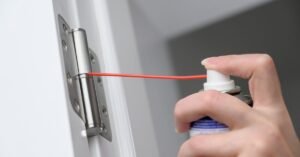
Step 1: Identify Which Hinge Is Making the Noise
Open and close the door slowly.
Listen carefully to determine where the squeaking is coming from. Most interior doors have two or three hinges, and sometimes only one is responsible for the noise.
If you’re unsure, place your fingers lightly against the hinge while moving the door. You may feel vibration or movement around the noisy section.
Check all hinges rather than assuming the top one is responsible.
Step 2: Clean the Door Hinges
-
Open the door fully so you can access the hinges.
-
Wipe around the hinge plates with a clean cloth.
-
Use an old toothbrush to remove dirt around the hinge pin.
-
If necessary, use a small amount of mild detergent and water.
-
Dry the hinges thoroughly before applying lubricant.
Avoid soaking the hinges with water. You don’t want moisture sitting around the metal components.
Step 3: Apply Lubricant to the Hinges
Apply a small amount of suitable lubricant to the hinge pin and the moving joints.
Follow these instructions:
-
Place a cloth or paper towel underneath the hinge to catch drips.
-
Apply a small amount of lubricant around the hinge pin.
-
Work the door backwards and forwards several times.
-
Allow the lubricant to move into the hinge joints.
-
Wipe away excess product.
Don’t spray the entire door or surrounding wall. A little lubricant in the right place is usually enough.
If using an aerosol, follow the manufacturer’s instructions and avoid breathing in the spray.
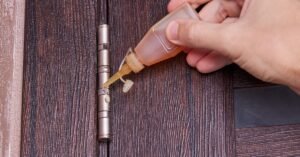
Step 4: Test the Door
Open and close the door several times.
Listen carefully.
If the squeaking has disappeared, you’ve probably solved the problem.
If you can still hear noise, try applying a small additional amount of lubricant to the affected hinge.
Sometimes older hinges need a little more attention, particularly if they haven’t been maintained for years.
Step 5: Tighten Any Loose Hinge Screws
Use a screwdriver to gently tighten any loose screws.
Don’t overtighten them, as this can damage the screw heads or surrounding timber.
If a screw spins without tightening, the hole may be stripped. A suitable timber repair may be necessary before the screw can hold properly.
For a door that has dropped or become misaligned, tightening the hinges may help, but more substantial adjustment could be needed.
Which Lubricant Works Best for Squeaky Doors?
Not every lubricant is suitable for every situation.
Choosing the right product can help prevent the squeaking from returning.
| Lubricant | Best Use | Recommendation |
|---|---|---|
| Silicone spray | General hinge lubrication | Good option |
| White lithium grease | Metal-to-metal hinge contact | Good longer-lasting option |
| WD-40 Multi-Use Product | Loosening sticky or lightly corroded hinges | Useful for cleaning and freeing movement |
| Light machine oil | Suitable metal hinge mechanisms | Good option |
| Cooking oil | Household hinges | Avoid |
My recommendation: For ordinary interior door hinges, use a suitable silicone lubricant or light machine oil. For hinges requiring longer-lasting grease, white lithium grease may be appropriate if the manufacturer permits it.
Avoid cooking oils such as vegetable or olive oil. They can become sticky, attract dust and leave unpleasant residue over time.
Common Mistakes to Avoid When Fixing Squeaky Doors
Fixing a squeaky door is straightforward, but a few common mistakes can make the problem worse.
Using Too Much Lubricant
More lubricant doesn’t necessarily mean better results.
Excess product can drip onto flooring, stain surrounding surfaces and collect dust.
Apply a small amount and wipe away anything left over.
Lubricating Without Cleaning First
Applying lubricant over dirt and grime can leave the hinge coated in a mixture of oil and debris.
Clean the hinge first, then lubricate it.
Ignoring Loose Screws
If the hinge is moving because its screws are loose, lubricant alone won’t solve the underlying problem.
Check the screws before finishing the job.
Using the Wrong Product
Household cooking oils and unsuitable general-purpose products can cause problems over time.
Choose a lubricant designed for the material and moving parts involved.
Removing Hinge Pins Without Supporting the Door
Some homeowners immediately try removing hinge pins to lubricate them.
This can work, but it isn’t usually necessary for a simple squeak.
A heavy door can shift unexpectedly if its pins are removed without proper support. Start with external lubrication before attempting this method.
Helpful Tips for Keeping Door Hinges Quiet
Try these simple habits:
-
Inspect hinges twice a year: Look for dirt, rust, loose screws and signs of wear.
-
Keep hinges clean: Wipe away dust and grime before they build up.
-
Lubricate when needed: Don’t wait until every door in the house starts squeaking.
-
Check bathroom doors: Humidity and moisture can contribute to corrosion.
-
Listen for changes: New scraping or grinding noises may indicate a problem beyond simple friction.
-
Check door alignment: Make sure the door isn’t rubbing against the frame or floor.
You don’t need to spend much time maintaining door hinges. A quick inspection during your regular household maintenance routine can prevent many annoying problems.
What If the Door Still Squeaks After Lubrication?
Sometimes lubrication doesn’t solve the problem.
If you’ve cleaned the hinges, applied suitable lubricant and tightened the screws but the noise remains, investigate further.
Here are a few possibilities.
The Hinge Pin Is Worn
Older hinges can develop worn or damaged pins. If the hinge has excessive movement, visible damage or persistent grinding, replacement may be necessary.
The Door Is Rubbing Against the Frame
Look for shiny marks, scratches or worn paint around the door edges.
These signs may indicate that the door is rubbing against the frame rather than making noise inside the hinges.
The Hinges Are Damaged
Bent, cracked or heavily corroded hinges may need replacing.
Choose replacement hinges that are suitable for the door’s weight and existing installation.
When Should You Call a Professional?
Most squeaky interior doors are suitable for DIY maintenance.
However, there are situations where getting professional assistance makes more sense.
Consider contacting a carpenter or qualified door installer if:
-
The door has dropped significantly.
-
The frame appears damaged or distorted.
-
The hinges are pulling away from the timber.
-
The door is unusually heavy and difficult to support.
-
The door has structural damage.
-
Repeated adjustments haven’t corrected the problem.
If you’re dealing with an exterior security door or fire-rated door, make sure any repairs preserve its required safety and security features.
Don’t ignore a badly damaged hinge. A heavy door can become unsafe if its support is compromised.
Frequently Asked Questions
1. What Is the Easiest Way to Fix a Squeaky Door?
The easiest solution is to clean the hinges and apply a small amount of suitable lubricant around the hinge pins and moving joints. Open and close the door several times to distribute the lubricant.
2. Can I Use WD-40 on Squeaky Door Hinges?
Yes. WD-40 Multi-Use Product can help free sticky hinges and loosen light corrosion. However, a dedicated hinge lubricant, silicone spray or suitable grease may provide better ongoing lubrication.
3. Why Does My Door Still Squeak After Lubricating It?
The problem could be caused by dirt inside the hinge, worn hinge pins, loose screws or a misaligned door. Check each hinge and inspect the door edges for rubbing marks.
4. Is Silicone Spray Good for Door Hinges?
Yes. Silicone spray is suitable for many household door hinges and helps reduce friction. Always check the product label to ensure it is appropriate for the hinge material.
5. Can I Use Olive Oil to Stop a Door Squeaking?
It’s not recommended. Olive oil can become sticky, attract dust and leave residue inside the hinge. Use a proper household lubricant instead.
6. How Often Should Door Hinges Be Lubricated?
There isn’t a fixed schedule for every household. Inspect your hinges twice a year and lubricate them when they begin showing signs of friction or squeaking.
7. Why Does My Door Squeak Only When Opening?
The hinge may be experiencing friction in one direction, or the door may be rubbing against its frame. Apply lubricant to the hinge joints and check the door’s alignment.
8. Do I Need to Remove the Door to Fix Squeaky Hinges?
Usually not. Most squeaky doors can be fixed without removing the door or taking the hinges apart. External lubrication is generally the easiest place to start.
Final Recommendation
A squeaky door is one of those little household problems that can become incredibly irritating if left alone. Fortunately, it’s also one of the easiest repairs to tackle yourself.
Start by cleaning the hinges, apply a suitable lubricant, tighten any loose screws and test the door. In most cases, those simple steps will restore smooth, quiet movement without needing to replace anything.
A few minutes of basic maintenance can save you the annoyance of listening to that squeak every time someone walks through the door.
Home Maintenance DIY is here to help you solve everyday household problems with practical advice, straightforward instructions and affordable DIY solutions.