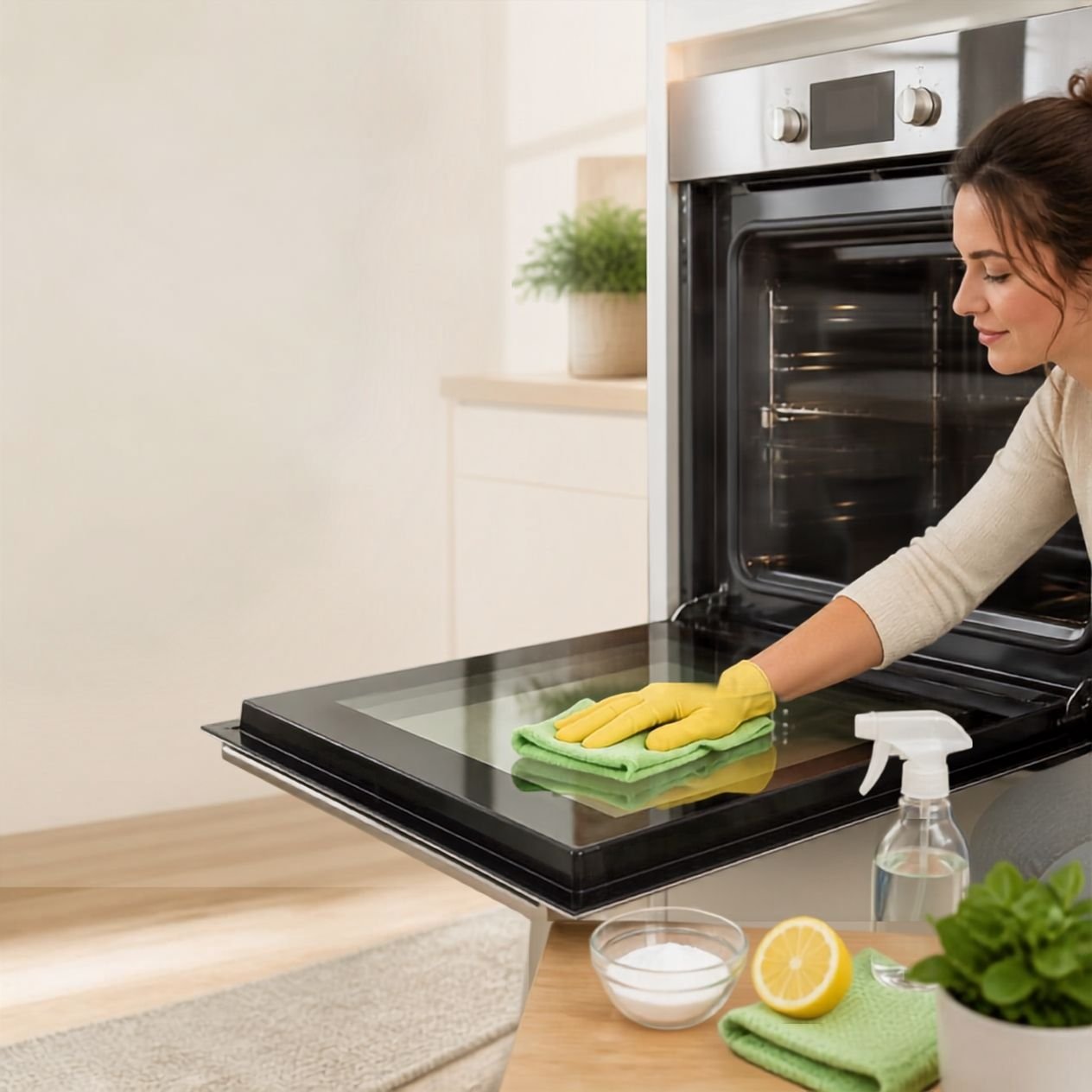
The Easiest Way to Clean Oven Glass Doors
A dirty oven door can make an otherwise clean kitchen look neglected. Worse, baked-on grease and cloudy brown stains can seem almost impossible to remove once they have been heated again and again.
The good news? You usually don’t need expensive oven cleaners or hours of scrubbing.
The easiest way to clean oven glass doors is to soften the baked-on grime first, then gently lift it away with a non-abrasive cleaner and the right tool. The trick is not brute force. It’s giving the grease time to loosen.
For everyday dirt, warm water and dishwashing liquid may be enough. For stubborn, dark deposits, a paste made from baking soda and water can work remarkably well.
Let’s get that glass clear again.
Why Oven Glass Gets So Dirty
Oven glass is exposed to more than you might think.
Every time you roast meat, bake a casserole or cook something particularly greasy, tiny amounts of oil and food vapour can settle on the inside of the door. At first, you may barely notice it.
Then the oven heats up.
The residue gets baked onto the glass, and repeated cooking creates layer after layer. Eventually, what started as a light film becomes a hard, brown or black coating.
There can also be grease between the glass panels on some oven doors. That’s a slightly different problem because the dirty area isn’t accessible from the cooking cavity.
Before cleaning, it’s worth figuring out which part of the door is dirty.
The Easiest Way to Clean Oven Glass Doors
For most household ovens, start with the simplest method rather than reaching immediately for a harsh chemical.
You’ll need:
- Dishwashing liquid
- Warm water
- Baking soda
- A soft sponge or microfiber cloth
- A plastic scraper or old plastic card
- A spray bottle
- Clean towels
Avoid steel wool, abrasive scouring pads and sharp metal blades. Oven glass can scratch, and once scratched, there’s no simple cleaning trick that will restore the surface.
Step 1: Make Sure the Oven Is Completely Cool
This sounds obvious, but don’t skip it.
Never spray cold water onto extremely hot oven glass. Sudden temperature changes can cause thermal stress and potentially damage the glass.
Wait until the oven and door are completely cool.
If you’ve recently cooked something, give it plenty of time.
Step 2: Remove Loose Debris
Open the oven door and wipe away crumbs, loose food and anything sitting on the glass.
A dry microfiber cloth works well here.
There’s no point turning loose crumbs into a wet paste before you’ve removed them.
Step 3: Mix a Simple Cleaning Paste
For greasy or baked-on marks, mix baking soda with a small amount of water until you have a thick paste.
You don’t want it runny.
A thick paste stays where you put it and gives the baking soda more time to work against the residue.
Spread it over the dirty areas of the glass. Don’t forget the corners, where grease often accumulates.
Leave the paste sitting for around 15 to 30 minutes.
For particularly stubborn deposits, you can leave it longer.
Step 4: Gently Work on the Stubborn Areas
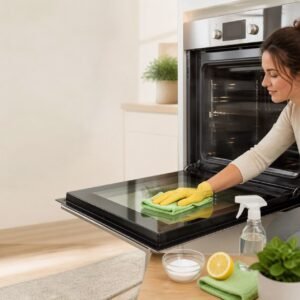
After the paste has had time to soften the grime, use a damp non-abrasive sponge.
Work in small circular movements.
Don’t attack the glass with excessive pressure. If the grime isn’t moving, add a little more moisture and give it additional time rather than simply scrubbing harder.
That’s one of the biggest mistakes people make when cleaning oven glass.
Patience beats pressure.
What About a Plastic Scraper?
A plastic scraper can be useful for stubborn, raised deposits.
Hold it at a shallow angle and gently push it across the glass. The goal is to lift softened residue, not gouge at the surface.
Never use excessive force.
A plastic card, such as an old loyalty card, can also work for small areas.
Step 5: Wipe Away the Cleaning Paste
Once the grime has loosened, use a clean damp microfiber cloth to remove the baking soda mixture.
You may need several passes.
Rinse the cloth regularly rather than spreading the dirty paste around the door.
When most of the residue has disappeared, wipe the glass again with clean water.
This removes remaining baking soda and detergent.
Step 6: Dry and Polish the Glass
The final step is surprisingly important.
Use a dry microfiber cloth to buff the glass.
This removes water marks and leaves the surface looking much clearer.
If the glass still looks streaky, dampen another clean cloth with a small amount of diluted dishwashing liquid, wipe the area and then rinse with clean water.
Don’t leave cleaning products behind.
How to Clean Light Grease and Fingerprints
Not every oven door needs baking soda.
If you’re dealing with fingerprints, light grease or fresh splashes, keep things simple.
Add a few drops of dishwashing liquid to warm water. Dip a microfiber cloth into the mixture and wring it out well.
Wipe the glass.
Then use another damp cloth to remove the soap and finish with a dry microfiber cloth.
Doing this regularly can prevent heavy buildup from developing in the first place.
How to Remove Really Stubborn Baked-On Grease
Some oven doors are another story.
If the glass hasn’t been cleaned for months or years, ordinary soapy water may barely touch it.
This is where the baking soda paste becomes useful.
Apply a generous layer to the worst areas and let it sit for 30 minutes or longer. The longer contact time gives the moisture an opportunity to soften the hardened residue.
You can then gently work over the area with a non-scratch sponge.
Repeat the process if necessary.
One cleaning session may not remove years of buildup.
That’s perfectly normal.
A Useful Trick for Extra-Heavy Grime
If the baking soda paste has dried too quickly, place a warm, damp cloth over the affected area for several minutes.
The added moisture can help soften the residue again.
Don’t pour large amounts of water onto the door. You want controlled moisture, not a puddle running into gaps around the glass.
Can You Use Vinegar on Oven Glass?
Vinegar is commonly recommended for household cleaning, but you don’t necessarily need it for oven glass.
Baking soda and dishwashing liquid are often enough for ordinary grease and food residue.
If you do use vinegar, don’t combine it with commercial cleaning products unless the product label specifically says that doing so is safe.
Also remember that the bubbling reaction between vinegar and baking soda looks impressive, but the fizz itself isn’t what makes the cleaning effective. Once the two substances react, much of their original cleaning properties have been neutralised.
For this job, keeping things simple usually works better.
What You Should Never Use on Oven Glass
Oven glass is tough, but it isn’t indestructible.
Avoid aggressive scraping with knives, razor blades or other sharp metal objects unless your oven manufacturer specifically permits that method.
You should also avoid abrasive powders, steel wool and harsh scouring pads.
These can leave tiny scratches.
Don’t use oven cleaner indiscriminately, either. Some oven cleaners are extremely caustic and may have specific instructions concerning glass, seals, painted surfaces and aluminium components.
Always read the manufacturer’s instructions before using a commercial product.
Don’t Forget the Outside of the Door
The outside glass usually needs less work.
Fingerprints and cooking vapour are the main problems.
A little dishwashing liquid diluted in warm water is usually a good starting point.
Apply it to your cloth rather than flooding the door with liquid. This is particularly important around buttons, switches, handles and the edges of the door.
Wipe clean and dry thoroughly.
For stainless steel trim, follow the manufacturer’s cleaning recommendations because the surrounding material may react differently to certain products.
What If the Dirt Is Between the Glass Panels?
This is where things get more complicated.
Many modern oven doors contain two or more panes of glass. The gap between them can eventually become cloudy or greasy.
If you clean the outside and inside surfaces but the door still looks dirty, check whether the grime is actually trapped between the panes.
Don’t start removing screws immediately.
Oven door designs vary considerably, and some manufacturers provide specific instructions for removing the door or separating the glass panels. Others don’t expect homeowners to disassemble them.
Check the oven’s manual first.
If the manufacturer provides a safe glass-removal procedure, follow it exactly.
If there are no instructions, professional cleaning may be safer than experimenting with the door mechanism.
Should You Remove the Oven Door?
Usually, you don’t need to.
For normal cleaning, leaving the door attached makes the job easier and reduces the chance of accidentally damaging hinges or misaligning the door.
Some people remove the door because it allows them to lay it flat, making cleaning easier.
That can work, but only if your oven is designed for straightforward door removal and you know how the hinge locks operate.
If you’re unsure, leave it attached.
A clean oven isn’t worth an injured finger or damaged hinge.
The Best Way to Prevent Dirty Oven Glass
Cleaning becomes much easier when you stop the grime from building up in the first place.
You don’t need to clean the entire door after every meal.
Instead, wipe obvious splashes once the oven has cooled.
If something greasy has splattered across the glass, deal with it sooner rather than later. Fresh grease is dramatically easier to remove than grease that has been baked repeatedly.
It’s also worth giving the glass a proper clean every few weeks if you use your oven frequently.
That small amount of maintenance can save you from a much bigger cleaning job later.
A Simple Oven Glass Cleaning Routine
For a busy household, this routine is enough.
After cooking: Allow the oven to cool completely and wipe away obvious splashes.
Every week or two: Clean fingerprints and light grease with warm water and dishwashing liquid.
When buildup appears: Use baking soda paste and allow it time to soften the residue.
For stubborn deposits: Repeat the treatment rather than scrubbing aggressively.
For dirt between panes: Check the manufacturer’s instructions before attempting disassembly.
The idea is simple: clean small messes before they become permanent-looking stains.
Why Soaking Time Matters More Than Scrubbing
Here’s the part many people get wrong.
When oven grime refuses to move, the natural reaction is to scrub harder.
That’s usually the least effective approach.
Baked-on grease is stubborn because heat has changed the residue and bonded it firmly to the surface. Adding moisture and allowing time for that moisture to penetrate and soften the material can make removal much easier.
Think of it as loosening the problem before trying to remove it.
A few extra minutes of waiting can save a lot of elbow grease.
Frequently Asked Questions
What is the easiest way to clean oven glass doors?
For most dirty oven doors, a thick paste made from baking soda and water is an easy starting point. Let it sit for 15 to 30 minutes, gently scrub with a non-abrasive sponge, wipe away the residue and polish with a microfiber cloth.
Can I use baking soda on oven glass?
Yes, baking soda can be used to help remove grease and baked-on food residue from many oven glass surfaces. Use it gently and avoid aggressive scrubbing that could scratch the glass.
How do I remove baked-on grease from oven glass?
Apply a thick baking soda and water paste to the affected area and allow it to sit. After the residue softens, gently remove it with a soft sponge or suitable plastic scraper.
Can I use a razor blade on oven glass?
It’s better not to use a razor blade unless your oven manufacturer specifically states that the method is suitable for your particular glass. Incorrect scraping can scratch or damage the surface.
Why is my oven glass still dirty after cleaning?
The grime may be trapped between two panes of glass rather than sitting on the accessible surface. If that’s the case, check your oven manual for instructions before attempting to remove or separate the glass.
How often should I clean my oven door?
If you use your oven regularly, wiping obvious splashes every week or two can prevent heavy buildup. A deeper clean can be done whenever grease and baked-on residue become noticeable.
The Simple Approach Works Best
You don’t need a cupboard full of specialist products to get your oven glass looking clean again.
Start with warm water and dishwashing liquid for light marks. Move to baking soda paste when the grease has been baked onto the surface, and give the cleaner time to do some of the work.
Most importantly, resist the temptation to attack stubborn grime with excessive force.
The easiest way to clean oven glass doors is to soften the mess first, remove it gently, and keep the glass maintained afterward.
That approach is inexpensive, straightforward and much kinder to the glass than aggressive scrubbing.