Best Mulch for U.S. Gardens
A Complete Homeowner’s Guide
Choosing the best mulch for U.S. gardens can make a noticeable difference to how healthy, attractive and easy to maintain your garden becomes. The right mulch helps conserve soil moisture, suppress weeds, protect plant roots from temperature swings and gradually improve the soil as organic materials break down.
But there is no single mulch that works perfectly everywhere in the United States. A gardener in Arizona faces very different conditions from someone in Florida, Minnesota or Oregon. Your climate, soil type, plants, rainfall and the location of your garden bed all matter.
Fortunately, choosing mulch does not have to be complicated. Once you understand what each type does best, you can select the right material for your particular garden.
What Makes the Best Mulch for U.S. Gardens?
Good mulch creates a protective layer between the soil and the outside environment.
Depending on the material, mulch can help:
- Reduce evaporation
- Keep soil cooler during hot weather
- Protect roots from temperature extremes
- Suppress weeds
- Reduce soil erosion
- Prevent soil from splashing onto plants during rain
- Improve the appearance of garden beds
- Add organic matter as it decomposes
- Reduce the amount of time spent watering and weeding
For many U.S. gardens, organic mulches such as shredded bark, wood chips, pine straw, straw and compost are excellent options.
However, the best choice depends heavily on what you are growing.
A vegetable garden may benefit from a different mulch than a flower bed, shrub border or drought-tolerant landscape.
The Best Types of Mulch for U.S. Gardens
1. Shredded Bark Mulch
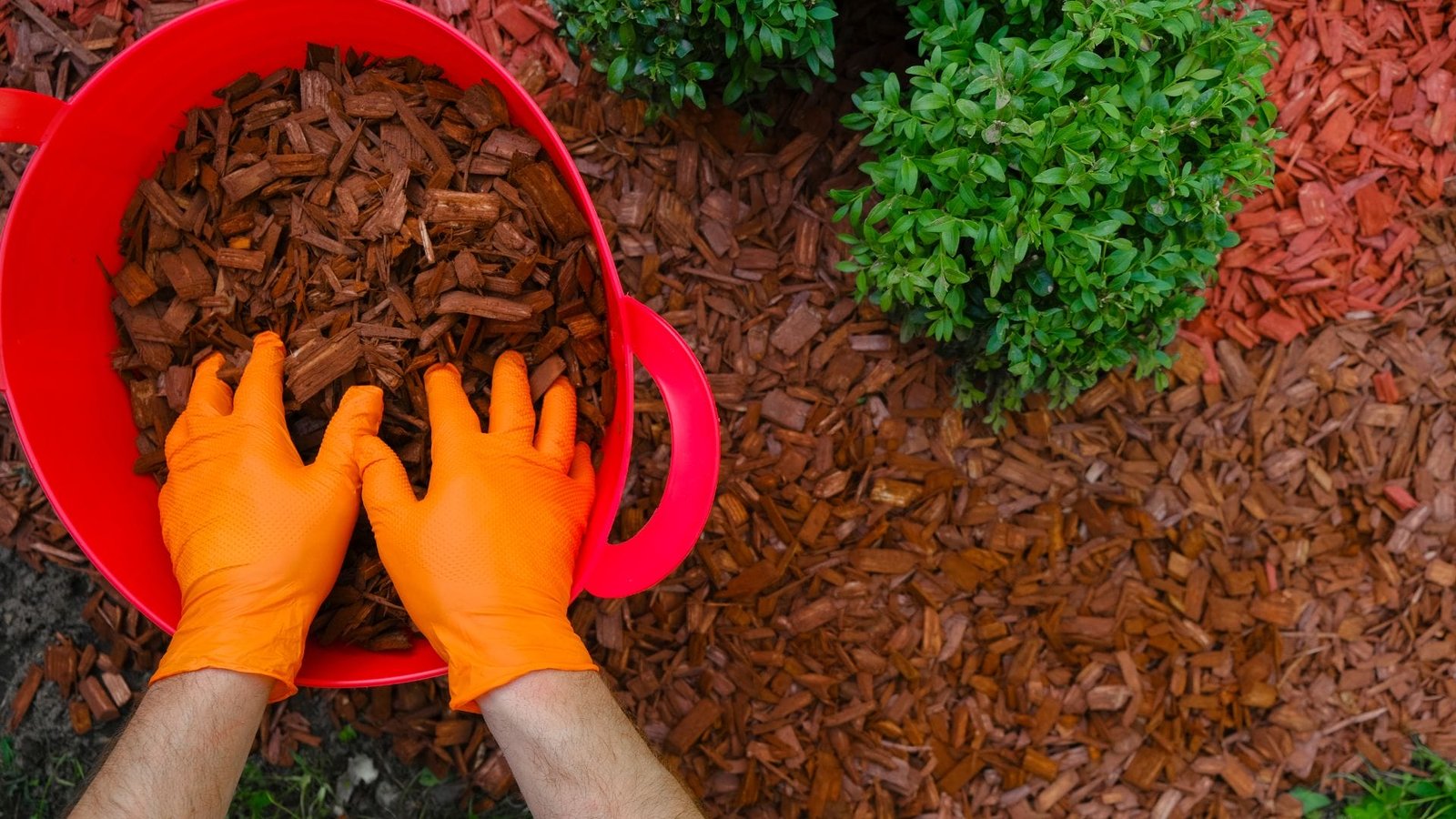
Shredded bark is one of the most popular choices for residential landscaping.
It provides an attractive, natural appearance and works particularly well around shrubs, trees and ornamental plants.
Because the pieces are relatively small, shredded bark tends to knit together and stay in place better than some larger wood chips, making it useful on gently sloping beds.
Best for: Flower beds, shrubs, trees and general landscaping.
Advantages:
- Attractive appearance
- Good weed suppression
- Helps retain soil moisture
- Relatively long-lasting
- Suitable for many ornamental landscapes
The downside is that bark mulch can become compacted over time if it is applied too thickly.
2. Wood Chips
Wood chips are an excellent choice for larger garden beds, trees, shrubs and naturalized landscapes.
They are generally longer-lasting than fine organic mulches because the larger pieces decompose more slowly.
Wood chips also provide excellent coverage and can help protect soil from heavy rain and summer heat.
Best for: Trees, shrubs, perennial beds and larger landscapes.
One important point: keep wood chips on top of the soil rather than mixing large quantities into the ground. As woody material decomposes, it can temporarily affect nutrient availability near the soil surface.
3. Pine Straw
Pine straw is especially popular in the southeastern United States and other areas where pine trees are abundant.
It is lightweight, easy to spread and works particularly well around acid-loving plants such as azaleas and some types of blueberries.
Pine straw also has a natural appearance and can work well on slopes because the needles tend to interlock.
Best for: Acid-loving plants, shrubs, flower beds and southeastern landscapes.
Because pine straw is relatively lightweight, it may need to be replenished more frequently than heavier wood-based mulches.
4. Straw
Straw can be a useful mulch for vegetable gardens.
It creates a loose protective layer over the soil that helps reduce evaporation and can keep fruits and vegetables from sitting directly on wet soil.
It can also help reduce mud and soil splashing during heavy rain.
Make sure you are buying clean straw rather than hay. Hay may contain seeds that can introduce unwanted weeds into your garden.
Best for: Vegetable gardens, strawberries and other productive garden areas.
5. Compost
Compost is an excellent soil amendment and can also be used as a relatively thin mulch.
It adds organic matter and can improve soil structure over time.
However, compost generally does not provide the same long-lasting weed suppression as wood chips or bark.
A good approach is to use compost to improve the soil and then place a more durable organic mulch over it.
Best for: Vegetable gardens, flower beds and improving poor soil.
Always use mature, finished compost rather than partially decomposed material.
6. Grass Clippings
Grass clippings can be useful when handled correctly.
A thin layer of dry grass clippings can provide organic matter and help conserve moisture.
However, avoid applying a thick layer of fresh, wet clippings. They can mat together, restrict air movement and create unpleasant odors as they decompose.
If you use grass clippings, apply them in thin layers and make sure the lawn has not recently been treated with a product that makes the clippings unsuitable for garden use.
Best for: Vegetable gardens and informal garden beds.
7. Inorganic Mulches
Not every mulch is organic.
Gravel, river rock and decorative stone are sometimes used in landscaping, particularly in dry climates.
Stone mulch does not decompose and can therefore be extremely long-lasting.
It can work particularly well around drought-tolerant plants, pathways and certain xeriscaping designs.
However, rocks can absorb and radiate heat, which may make some planting areas considerably hotter.
Best for: Xeriscaping, drought-tolerant landscapes and decorative beds.
How Much Mulch Should You Use?
One of the biggest mulching mistakes homeowners make is using far too much.
For many landscape beds, approximately 2 to 4 inches of mulch is a reasonable range, depending on the material and plants.
Do not assume that a thicker layer is automatically better.
Excessively deep mulch can interfere with water movement, reduce airflow and create overly damp conditions around plant stems and tree trunks.
Fine mulch generally needs less depth than coarse material.
Keep Mulch Away From Tree Trunks
This deserves special attention.
Do not create a volcano-shaped mound of mulch around a tree.
Instead, spread mulch across the surrounding soil while leaving a clear space around the trunk.
Constantly damp mulch pressed against bark can contribute to decay and other tree health problems.
Mulch should protect the soil around a tree, not smother the trunk.
How to Apply Mulch Correctly
Applying mulch is a relatively simple DIY project.
Step 1: Remove Existing Weeds
Remove established weeds before applying mulch.
Small weeds may be suppressed by mulch, but larger established weeds can continue growing through the material.
Step 2: Prepare the Garden Bed
Remove dead plant material and tidy the area.
If the soil is extremely dry, water it before applying the mulch.
Step 3: Spread the Mulch
Distribute the mulch evenly across the garden bed.
Aim for consistent coverage rather than creating large piles.
Step 4: Leave Space Around Plants
Keep mulch away from plant stems and tree trunks.
For larger trees, maintain a generous clear area around the trunk.
Step 5: Check the Depth
Use a ruler or simply check the layer visually.
Avoid creating an excessively deep blanket of mulch.
What Is the Best Mulch for Vegetable Gardens?
For many U.S. vegetable gardens, straw, shredded leaves, compost and untreated grass clippings can be useful options.
Straw is particularly helpful around vegetables because it keeps soil from splashing onto plants and can help maintain more consistent soil moisture.
Shredded leaves are another excellent option because they are readily available in many parts of the country during fall.
Avoid using thick layers of whole leaves because they can mat together and prevent water and air from reaching the soil.
Shredding them first makes them much easier to use as mulch.
What Is the Best Mulch for Flower Beds?
For ornamental flower beds, shredded bark, wood chips and compost are popular choices.
Your decision can come down to appearance, availability, cost and how often you want to replenish the mulch.
Dark-colored mulch can create a strong contrast with flowers and foliage, while natural bark and wood tones provide a more understated appearance.
Choose based on both aesthetics and plant needs.
What Is the Best Mulch for Trees and Shrubs?
Wood chips and bark mulch are generally excellent choices around established trees and shrubs.
A broad mulch ring helps protect the soil from lawn equipment, reduces competition from grass and helps conserve moisture.
Avoid piling mulch directly against the trunk.
A properly mulched tree should have a visible transition between the trunk and the mulch.
Common Mulching Mistakes to Avoid
Using Too Much Mulch
More is not necessarily better.
A huge layer of mulch can cause problems instead of solving them.
Creating Mulch Volcanoes
Never pile mulch against tree trunks.
Spread it outward across the soil.
Mulching Over Existing Weeds
Large weeds can survive beneath mulch and eventually grow through it.
Remove them first.
Using Fresh Wood Material Incorrectly
Do not mix large quantities of fresh wood chips into the soil.
Use them as a surface mulch.
Using Hay Instead of Straw
Hay can contain seeds that introduce unwanted weeds.
Use clean straw when possible.
Ignoring Drainage Problems
Mulch can help manage moisture, but it cannot repair poorly drained soil.
If water regularly pools in a garden bed, investigate the drainage problem rather than simply adding more mulch.
Choosing Rock Mulch for the Wrong Location
Stone can become very hot in direct sunlight.
It may not be appropriate around plants that prefer cooler root conditions.
Helpful Mulching Tips for U.S. Homeowners
Your local climate should influence your choice.
In hot, dry areas such as parts of the Southwest, mulch can be particularly valuable for reducing evaporation.
In colder northern states, mulch can help protect plant roots from extreme temperature fluctuations.
In humid areas, avoid creating excessively wet conditions around plants that require good drainage.
Fall can also be an excellent time to use shredded leaves as mulch. Instead of sending every leaf to the landfill, homeowners can often turn them into a useful garden resource by shredding them first.
Check your mulch after heavy rain, strong winds and severe weather. It can shift, wash away or become uneven.
How Often Should You Replace Mulch?
There is no universal schedule.
Some mulches break down relatively quickly, while coarse bark and wood chips can remain useful for much longer.
Instead of automatically replacing mulch every year, inspect the garden.
If the mulch has become very thin, weeds are increasing and bare soil is becoming exposed, it may be time to add more.
Do not simply keep piling new mulch on top of old mulch indefinitely.
Occasionally check the depth and condition of the existing layer before adding another application.
When You Should Call a Professional
Mulching is normally a straightforward DIY task, but sometimes it reveals larger landscaping problems.
Consider getting professional assistance if you discover:
- Major drainage problems
- Significant soil erosion
- Large or hazardous trees
- Extensive plant disease
- Serious pest infestations
- Major irrigation problems
- Unstable retaining walls
- Dangerous slopes
Never put yourself at risk trying to mulch around unstable trees, steep slopes or other hazardous areas.
Frequently Asked Questions
What is the best mulch for U.S. gardens?
There is no single best mulch for every U.S. garden. Wood chips, shredded bark, pine straw, straw, compost and shredded leaves can all be excellent choices depending on your climate, plants and soil.
What is the best mulch for vegetable gardens?
Straw, shredded leaves, compost and suitable grass clippings are useful options. Straw is particularly popular because it helps conserve moisture and keeps soil from splashing onto vegetables.
How deep should mulch be?
A mulch layer of approximately 2 to 4 inches is suitable for many garden beds. Avoid excessive depths, particularly around trees and shrubs.
Should mulch touch tree trunks?
No. Keep mulch away from tree trunks. Piling mulch against the trunk can keep the bark excessively damp and contribute to tree health problems.
Is wood chip mulch good for gardens?
Yes. Wood chips are an excellent long-lasting mulch for many trees, shrubs and perennial garden beds. They help conserve moisture, suppress weeds and protect the soil surface.
Is pine straw good mulch?
Yes. Pine straw can work particularly well in the southeastern United States and around plants that tolerate or prefer acidic soil conditions.
Can I use leaves as mulch?
Yes. Shredded leaves make an excellent organic mulch. Shredding helps prevent them from forming a dense, wet layer that can interfere with water and air movement.
Does mulch completely stop weeds?
No. Mulch can significantly reduce weed growth, but it will not eliminate weeds completely. Remove established weeds first and monitor the garden regularly.
Final Thoughts
The best mulch for U.S. gardens depends on your climate, soil, plants and the type of garden you are maintaining.
For general landscaping, shredded bark and wood chips are excellent all-purpose choices. Pine straw can be particularly useful in the Southeast, while straw and shredded leaves are valuable options for vegetable gardens. Compost can improve soil, and stone can work well in appropriate drought-tolerant landscapes.
The most important thing is not simply choosing a popular mulch. Choose a material that fits your garden.
Apply it at the right depth, keep it away from plant stems and tree trunks, and monitor the garden throughout the growing season.
Done correctly, mulching is one of the simplest DIY improvements you can make to a home garden.