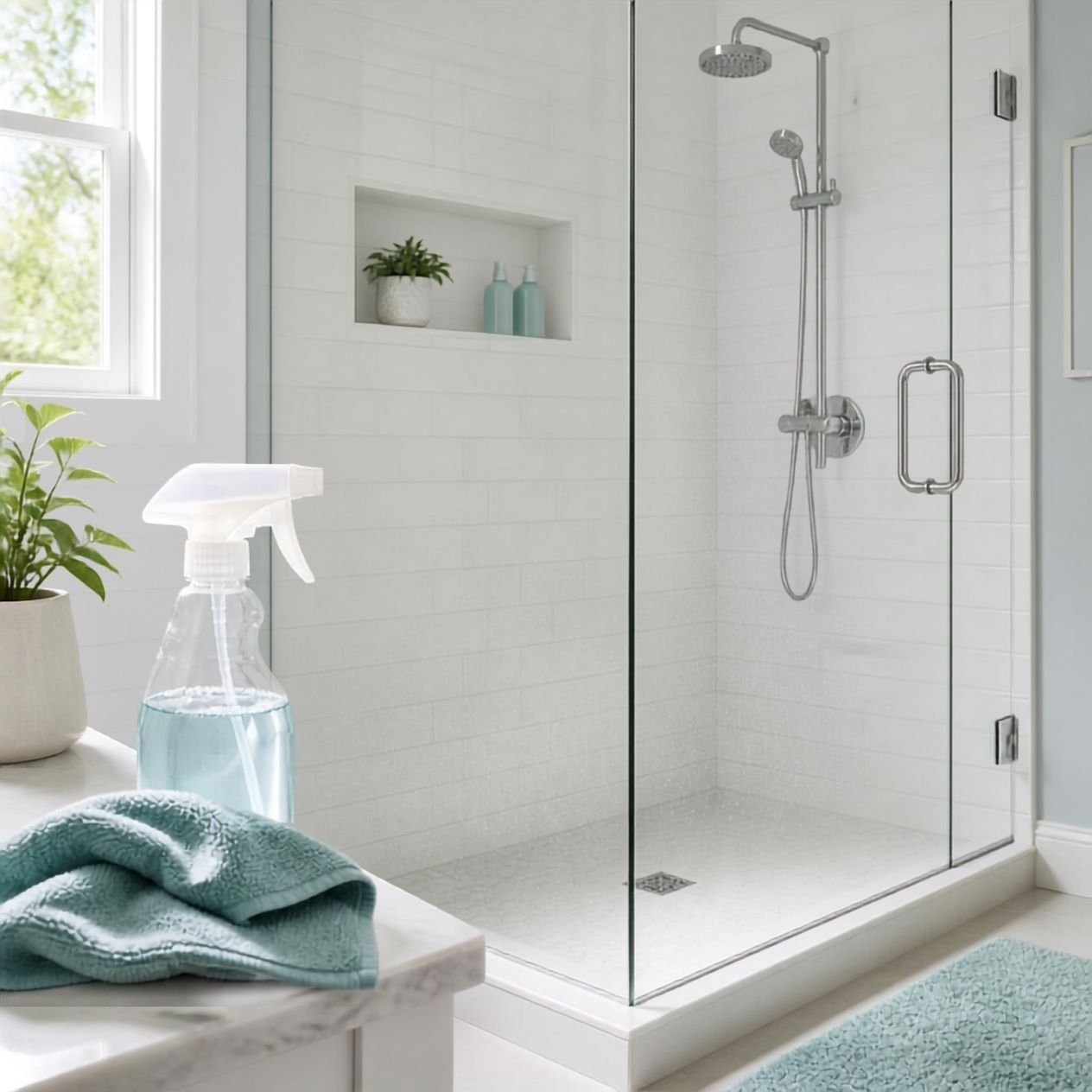
How to Clean a Shower Without Scrubbing
A grimy shower does not always need hours of hard scrubbing. In many cases, the right cleaner, enough contact time, and a little steam can do most of the work for you.
If you’re wondering how to clean a shower without scrubbing, the trick is to soften the buildup before you try to remove it. Soap scum, mineral deposits and body oils become much easier to rinse away when they have been given time to break down.
This approach is especially useful when the shower walls are covered in cloudy residue or the glass has developed white water spots. Instead of attacking every surface with a sponge, you can use a simple spray-and-wait routine.
Why Your Shower Gets So Dirty
Every shower leaves behind more than water.
Soap, shampoo, conditioner, skin oils and minerals from tap water can stick to tiles, glass, grout and fixtures. As the water evaporates, those substances remain behind and gradually form a dull film.
Hard water can make the problem worse. Calcium and magnesium deposits may create stubborn white marks that ordinary bathroom cleaners struggle to remove quickly.
There is another factor, too: moisture.
A warm, damp shower creates ideal conditions for mould and mildew, particularly around grout, silicone seals and poorly ventilated corners.
The good news is that you don’t necessarily have to scrub all of it away.
The Basic Spray-and-Rinse Method
One of the easiest ways to clean a shower without scrubbing is to use a suitable bathroom cleaner and give it plenty of time to work.
Start by removing bottles, razors, soap dishes and anything else sitting inside the shower.
Turn on the shower briefly with hot water. Let the room become warm and steamy for several minutes. The moisture helps loosen surface grime and makes the deposits easier for your cleaner to penetrate.
Turn the water off.
Spray the cleaner evenly across the shower walls, glass and other appropriate surfaces. Don’t immediately wipe it away.
That’s the important part.
Allow the product to sit for the amount of time recommended on its label. A cleaner needs contact time to dissolve or loosen the material you want to remove.
Afterward, rinse the surfaces thoroughly with warm water.
For light or moderate buildup, that may be all you need.

Use White Vinegar for Mineral Deposits
White vinegar can be useful for dissolving some mineral deposits and soap residue, particularly on suitable non-porous surfaces.
A simple approach is to combine equal parts white vinegar and water in a spray bottle. Spray the affected area generously and allow it to sit for around 10 to 15 minutes.
Then rinse thoroughly.
You may find that deposits that previously required vigorous scrubbing simply wash away.
However, don’t use vinegar on every bathroom surface. Acidic cleaners can damage natural stone such as marble, limestone and some other sensitive materials.
When you’re unsure, check the manufacturer’s care instructions first.
Try Dishwashing Liquid for Soap Scum
Soap scum is slightly different from mineral scale. It contains oils and fatty compounds, which is why a mild dishwashing liquid can sometimes work surprisingly well.
Mix a small amount of dishwashing liquid with warm water and apply it to the shower surface.
Let it sit for several minutes before rinsing.
For heavier soap buildup, apply the mixture more generously and give it additional contact time. The goal is to loosen the greasy film rather than physically grind it off.
This method can work particularly well on shower doors and smooth tiles.
Let Steam Do Some of the Work
Steam is one of the simplest tools available in a bathroom.
Before cleaning, run a hot shower for a few minutes with the bathroom door closed, provided your bathroom ventilation setup allows it safely.
The resulting warmth and moisture can soften dried soap residue.
You can then apply your cleaner while the surfaces are still warm. The cleaner has a better chance of spreading evenly instead of sitting on a completely dry, hardened layer.
Don’t rely on steam alone for mould or heavy mineral scale, though. Those problems usually need a suitable cleaning product as well.
Cleaning Shower Glass Without Scrubbing
Cloudy shower glass is usually caused by a mixture of soap residue and minerals from water.
Apply a suitable glass or bathroom cleaner and leave it on for the recommended contact time. Then rinse the glass thoroughly.
For mineral deposits, a vinegar solution may help if the glass manufacturer permits acidic cleaners.
After rinsing, use a shower squeegee to remove remaining water.
That final step matters.
Every drop of water that dries on the glass can leave behind minerals. Removing the water after every shower prevents those deposits from building up in the first place.
How to Clean Shower Tiles Without Scrubbing
Tiles are often easier to maintain than shower glass because many glazed ceramic and porcelain surfaces are relatively resistant to common bathroom grime.
Spray the appropriate bathroom cleaner over the tiles and allow it to sit.
Pay particular attention to areas around the shower floor, taps and corners where soap and body oils tend to collect.
After the recommended dwell time, rinse the tiles thoroughly.
If the tiles still look dirty, repeat the process rather than immediately reaching for an abrasive scrubber.
Two gentle cleaning cycles can be much kinder to a surface than one aggressive session.
Don’t Forget the Grout
Grout needs a little more care.
Although you can reduce the amount of physical work involved, heavily stained grout may not become completely clean with a simple spray and rinse.
For routine maintenance, spray an appropriate grout-safe cleaner onto the joints and allow it to work according to the product instructions.
Rinse well.
If the grout contains mould, use a product specifically intended for mould removal and follow its safety directions. Porous grout can hold onto staining, so severe discoloration may require more intensive cleaning or professional treatment.
What About Shower Mould?
Mould is different from ordinary dirt.
A cleaner that removes soap scum won’t necessarily solve a mould problem. For visible mould, choose a suitable mould-removal product and follow the manufacturer’s directions carefully.
Ventilation is just as important as cleaning.
Run the exhaust fan during showers and for a period afterward. If possible, leave the shower area exposed to moving air so moisture can escape.
Dryer surfaces are less inviting to mould.
Never mix household cleaning chemicals. In particular, bleach-based products should never be combined with vinegar, acids, ammonia or other incompatible cleaners because dangerous gases can be produced.
A Simple No-Scrub Shower Routine
If you want to spend less time cleaning, prevention beats repeated heavy cleaning.
Try this routine:
- Remove bottles and clutter from the shower.
- Run warm water briefly to loosen residue.
- Spray a suitable cleaner over the surfaces.
- Allow the product to sit as directed.
- Rinse thoroughly.
- Use a squeegee on glass and smooth walls.
- Leave the bathroom ventilated.
- Keep shower products off the floor where practical.
The entire routine can take only a few minutes once it becomes a habit.
How to Keep Your Shower Cleaner for Longer
The easiest shower to clean is the one that never becomes heavily coated with buildup.
Use a squeegee on the glass and walls after showering. You don’t need to make it perfect. A quick pass removes a surprising amount of water before it can evaporate.
Keep shampoo bottles and soap containers organised, too.
Bottles sitting directly on the shower floor can create damp areas underneath them. Soap residue also tends to accumulate around containers that aren’t moved regularly.
Once a week, give the shower a proper spray-and-rinse clean before buildup becomes difficult.
This is where how to clean a shower without scrubbing becomes more than a cleaning trick. It’s really a maintenance strategy.
When Scrubbing Is Still Necessary
There are limits to any no-scrub method.
Old mineral scale, deeply stained grout, thick soap deposits and neglected mould may require some physical cleaning. The longer buildup has been allowed to harden, the harder it can be to remove without agitation.
Even then, don’t automatically reach for the strongest abrasive pad.
Start with the least aggressive method suitable for the surface. Apply the right cleaner, give it adequate contact time, rinse and reassess.
You may discover that very little scrubbing is actually required.
Make Your Next Shower Easier to Clean
You don’t need to spend your weekend attacking bathroom grime.
A combination of appropriate cleaning products, steam, contact time, thorough rinsing and simple daily maintenance can dramatically reduce the amount of elbow grease required.
The biggest change is your timing. Don’t wait until soap scum and mineral deposits have formed a thick coating. Deal with the residue while it’s still relatively fresh.
Use the right product for the surface, never mix incompatible cleaners, ventilate the room and finish with a quick squeegee.
Your shower stays cleaner.
And your arms will thank you.