How to Unclog Bathroom Drains Without Chemicals
7 Easy DIY Methods
A slow or blocked bathroom drain is frustrating, especially when water starts pooling around your feet in the shower or sitting in the bathroom basin. The good news is that many common blockages can be cleared without harsh chemical drain cleaners, expensive products or an immediate call to a plumber.
If you want to learn how to unclog bathroom drains without chemicals, start by identifying the likely cause. Hair, soap residue and everyday grime are common culprits, and you can often remove them with simple household tools, hot water where suitable, or a basic drain snake.
In this practical guide, you’ll discover seven methods for clearing bathroom drains naturally, step-by-step instructions for tackling stubborn blockages, and mistakes to avoid. You’ll also learn when a blockage needs professional attention. These techniques are suitable for many Australian homes, although the best approach depends on your plumbing, drain type and the severity of the obstruction.
What Causes Bathroom Drains to Become Blocked?
Before reaching for a tool, consider what might be causing the problem. Different blockages respond to different methods.
Common causes include:
- Hair: Hair collects around drain covers and catches other debris, gradually restricting water flow.
- Soap scum: Soap residue combines with minerals in water and sticks to the inside of pipes.
- Toothpaste and grooming products: These can contribute to sticky deposits in bathroom basins.
- Dirt and personal care products: Everyday washing sends small amounts of grime into the drain.
- Foreign objects: Cotton buds, small plastic items and other objects can become lodged in the pipe.
A blockage near the drain opening is usually easier to clear than one deep inside the plumbing. If several drains are slow at the same time, the problem could be further down the drainage system.
How to Unclog Bathroom Drains Without Chemicals: 7 Methods
1. Remove Hair and Debris by Hand
This is often the best place to start, particularly with a shower or bathroom basin that drains slowly.
What you’ll need:
- Rubber gloves
- A torch
- Tweezers or plastic drain-cleaning tool
- An old cloth
Instructions:
- Remove the drain cover if it can be lifted or unscrewed safely.
- Shine a torch into the opening to locate visible hair and debris.
- Use gloved fingers, tweezers or a plastic drain tool to pull out the blockage.
- Place the removed material in the rubbish rather than pushing it further into the pipe.
- Replace the cover and run a small amount of water to check the drainage.
Hair often forms a compact, unpleasant clump just beneath the drain cover. Removing it may restore normal drainage immediately.
Avoid forcing tools deep into the pipe, as you could damage fittings or push the obstruction further down.
2. Use a Plunger
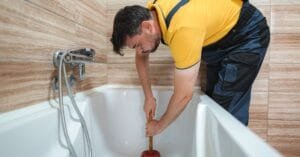
A plunger creates pressure and suction that can loosen blockages without chemical products. A cup-style sink plunger works well for many bathroom basins, while a suitable plunger can also help with some shower drains.
Instructions:
- Remove visible debris from the drain.
- Add enough water to cover the plunger’s rubber cup.
- For a bathroom basin, block the overflow opening with a damp cloth.
- Position the plunger firmly over the drain to create a seal.
- Push down gently at first, then use several firm, controlled strokes.
- Lift the plunger and check whether the water drains away.
- Repeat a few times if necessary.
The seal is essential. Without it, air escapes through the overflow or around the plunger instead of creating useful pressure.
If the blockage does not move after several attempts, stop rather than applying excessive force. A deeper obstruction may require a different approach.
3. Flush the Drain With Warm Water
Warm water may help loosen soft soap residue and greasy deposits, particularly when a drain is only slightly slow.
However, avoid pouring boiling water into bathroom drains. Very hot water can damage some plastic pipework, seals or other plumbing components, and it may crack certain basin materials.
Instructions:
- Remove any visible hair or debris first.
- Check whether your basin or shower manufacturer permits warm-water flushing.
- Run warm tap water into the drain for a short period.
- Observe whether the water begins to flow more freely.
- Stop if the water backs up or shows no sign of improvement.
Warm water is a maintenance measure rather than a reliable solution for a dense hair blockage. It will not dissolve a tangled mass of hair, so use mechanical removal when hair is the likely cause.
4. Try a Plastic Drain Snake
A small plastic drain snake is an inexpensive tool designed to catch hair and other debris close to the drain opening. It is particularly useful for shower drains.
Instructions:
- Remove the drain cover if possible.
- Slowly insert the plastic snake into the drain.
- Follow the tool’s instructions, allowing its small barbs to catch hair.
- Gently withdraw the tool without forcing it.
- Remove the collected debris and dispose of it in the rubbish.
- Repeat if needed, then flush with warm water where suitable.
Do not push aggressively against resistance. If the tool catches on a fitting or becomes stuck, carefully withdraw it rather than forcing it deeper.
For many hair-related bathroom blockages, this method is more effective than pouring homemade mixtures down the drain.
5. Use a Hand-Operated Drain Auger
A hand-operated drain auger, sometimes called a plumbing snake, can reach obstructions beyond the immediate drain opening.
This is a more advanced option than a plastic hair-removal tool. Choose an auger appropriate for the fixture and pipework, and follow the manufacturer’s instructions.
How to use it:
- Remove the drain cover or access point where appropriate.
- Feed the auger’s cable slowly into the drain.
- Turn the handle gently as directed by the manufacturer.
- Stop if you encounter strong resistance or the cable begins to bind.
- Withdraw the cable carefully and clean away any debris.
- Test the drain with a small amount of water.
Be cautious with older plumbing, delicate fittings and fixtures that could be scratched or damaged. If you cannot identify the obstruction or operate the auger safely, contact a plumber.
6. Clean an Accessible Basin Waste Trap
Some bathroom basins have an accessible waste trap beneath the sink. Hair, toothpaste residue and other debris can accumulate there.
Only attempt this if the trap is accessible, you can identify its fittings, and you are comfortable reassembling it correctly.
You’ll need: A bucket, rubber gloves, an old towel and a suitable cleaning brush.
- Place the bucket beneath the trap and lay a towel underneath.
- Check that the basin is not being used and that no water is running into the drain.
- Carefully loosen the trap’s removable fittings according to the manufacturer’s instructions.
- Allow the trapped water to drain into the bucket.
- Remove the accumulated debris and clean the removable components.
- Reassemble the trap, ensuring seals are correctly positioned.
- Run water briefly and inspect every connection for leaks.
Some traps are difficult to access or have brittle fittings. Do not force seized connections or dismantle unfamiliar plumbing. If you are unsure, a plumber can clean the trap without risking leaks or damage.
7. Clean the Drain Cover and Surrounding Area
Sometimes the obstruction is sitting directly beneath the cover rather than deep in the plumbing.
Soap scum, hair and grime can accumulate around the grate, reducing the opening available for water to pass through.
Remove the cover if it is designed to come off, then scrub it with warm water, ordinary dishwashing liquid and a small cleaning brush. Rinse it thoroughly and remove any visible hair from the drain entrance.
This method is particularly useful as preventative maintenance. Cleaning the cover regularly helps prevent hair and residue from accumulating into a larger blockage.
Common Mistakes to Avoid When Unclogging Bathroom Drains
Even simple DIY methods can make a blockage worse if used incorrectly.
- Pouring boiling water into the drain: Use warm water only when suitable for the plumbing and fixture.
- Mixing household cleaners: Never combine cleaning products, particularly bleach, acids or commercial drain cleaners.
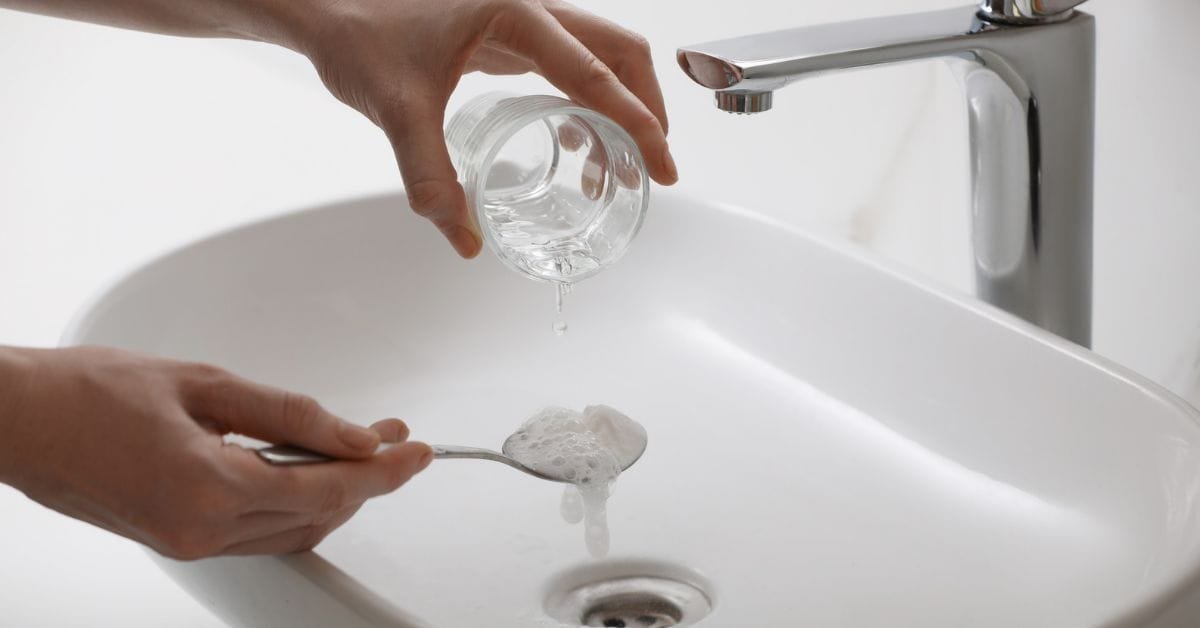
- Relying on baking soda and vinegar for every blockage: The fizzing reaction may loosen some surface residue, but it is not a dependable way to remove compacted hair or a solid obstruction.
- Pushing debris deeper into the pipe: Remove hair and other material rather than forcing it down the drain.
- Using excessive force with a plunger or snake: Too much pressure can damage fittings or seals.
- Ignoring recurring blockages: A drain that repeatedly slows down may have a deeper obstruction or an underlying plumbing problem.
If a chemical drain cleaner has already been used, do not plunge or dismantle the drain until you have checked the product’s safety instructions. Residual chemicals can splash onto your skin or eyes.
Helpful Tips for Keeping Bathroom Drains Clear
Prevention is easier than dealing with standing water.
- Install a drain hair catcher: Choose one that fits your shower or basin without obstructing normal drainage.
- Remove hair after each shower: A quick clean takes seconds and prevents hair from accumulating.
- Clean drain covers weekly: Remove visible hair and wash away soap residue.
- Avoid washing unsuitable waste down the basin: Cotton buds, wipes and other solid items belong in the rubbish.
- Flush with warm water when appropriate: Follow the fixture manufacturer’s guidance and avoid extreme temperatures.
- Act when drainage first slows: Early intervention is usually simpler than clearing a fully blocked drain.
A simple maintenance routine can reduce the frequency of blockages, although it cannot prevent every plumbing problem.
When Should You Call a Professional Plumber?
DIY methods are suitable for many minor bathroom blockages, but not all of them.
Contact a licensed plumber if:
- Multiple drains are blocked or draining slowly.
- Water backs up into another fixture when you use the basin or shower.
- You hear persistent gurgling from drains.
- The blockage keeps returning despite cleaning.
- Water leaks from pipe connections or beneath the bathroom.
- You suspect a damaged pipe or a blockage in the main drainage line.
- A tool becomes stuck or the obstruction cannot be reached safely.
If sewage backs up into your bathroom, stop using the affected fixtures and seek professional assistance promptly. Avoid contact with contaminated water.
Australian homeowners should use a suitably licensed plumber where required by their state or territory. A professional can determine whether the problem is a simple local obstruction or something further down the drainage system.
Frequently Asked Questions
What is the best natural way to unclog a bathroom drain?
For hair blockages, manually removing debris or using a plastic drain snake is often the most effective starting point. A plunger can help loosen other minor obstructions. The best method depends on the cause and location of the blockage.
Can baking soda and vinegar unclog a bathroom drain?
Baking soda and vinegar can produce fizzing that may loosen some surface residue, but the reaction is not a reliable way to clear compacted hair or a solid blockage. Mechanical removal is generally more useful for these problems.
Does salt and boiling water unclog bathroom drains?
This combination is not a dependable solution for a blocked bathroom drain. Boiling water can also damage some plumbing components and fixtures. Remove visible debris, use a suitable plunger or drain snake, and follow the manufacturer’s guidance for your plumbing.
How do I unclog a shower drain full of hair?
Remove the drain cover if possible, then use gloved fingers, tweezers or a plastic hair-removal tool to pull out the hair. Repeat carefully until the opening is clear, then test the drain with warm water if appropriate.
How can I unclog a bathroom sink without a plunger?
Start by removing visible debris and cleaning the drain cover. A plastic drain snake may remove hair and residue close to the opening. If the blockage remains and the basin has an accessible waste trap, cleaning it may help.
Why does my bathroom drain keep blocking?
Recurring blockages may result from ongoing hair accumulation, soap deposits, a deeper obstruction or damaged pipework. Clean the drain cover regularly, but arrange a plumbing inspection if the problem continues.
Is it safe to use homemade drain cleaners?
Simple cleaning methods can be suitable when used correctly, but homemade mixtures are not automatically safe or effective for every pipe or fixture. Never mix cleaning products, and avoid introducing boiling water or unsuitable substances into your plumbing.
How often should I clean bathroom drains?
Remove visible hair after showers and inspect drain covers weekly. Clean them more frequently if several people share the bathroom or hair accumulates quickly. Investigate persistent slow drainage instead of relying on routine cleaning alone.
Final Thoughts
Learning how to unclog bathroom drains without chemicals can save you time and help you avoid unnecessary products. Start with the simplest method: remove visible hair, clean the drain cover and try a suitable plunger or plastic drain snake.
For many minor blockages, these practical steps are enough to restore normal flow. If the drain remains blocked, several fixtures are affected or the problem keeps returning, a licensed plumber can identify the underlying cause.
The key is to tackle the blockage early, use the right tool for the job and never let a DIY repair compromise your safety or your plumbing.