
How to Unblock a Kitchen Sink Naturally
7 Simple DIY Methods
A blocked kitchen sink can turn an ordinary day into a frustrating mess. Water collects around the plughole, food scraps float back to the surface, and an unpleasant smell may begin drifting from the drain. Before reaching for a harsh chemical drain cleaner, there are several natural methods you can try using everyday household items.
Learning how to unblock a kitchen sink naturally can help you clear minor blockages caused by grease, soap residue and food particles without immediately calling a plumber. The trick is choosing the right method for the type of blockage and knowing when a simple DIY fix is unlikely to work.
In this guide, you’ll discover practical ways to clear a slow or blocked kitchen sink, including using hot water, baking soda, white vinegar and a sink plunger. You’ll also learn which common cleaning tricks to avoid, how to prevent future blockages and when it’s safer to call a professional.
What Causes a Kitchen Sink to Block?
Kitchen sinks deal with more than water. Every time you wash dishes, small amounts of grease, food residue, soap and other debris can enter the drain.
Over time, these materials may accumulate inside the pipework. Grease is a particularly common problem because it can cool, stick to the inside of pipes and trap other particles passing through the drain.
Common causes of a blocked kitchen sink include:
- Cooking grease and fat: These can cool and accumulate inside the drain.
- Food scraps: Rice, pasta, coffee grounds and vegetable peelings can contribute to blockages.
- Soap residue: Some residues combine with grease and debris to create a stubborn buildup.
- Foreign objects: Small utensils, packaging and other items can obstruct the waste pipe.
- A blocked trap: The curved pipe beneath the sink can collect debris.
- A deeper plumbing problem: A blockage farther along the drainage system may prevent water from escaping properly.
Before trying to clear the sink, check whether the water drains slowly or refuses to drain at all. A slow drain may respond to a gentle cleaning method, while completely standing water can indicate a more substantial obstruction.
How to Unblock a Kitchen Sink Naturally: 7 Methods to Try
Start with the gentlest approach and work your way through the options. You do not need to try every method if the blockage clears early.
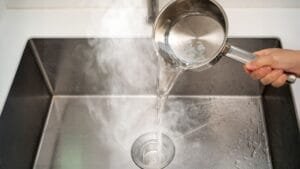
1. Flush the Drain with Hot Water
Hot water is a sensible first step when you suspect a minor grease buildup.
What you need:
- A kettle or saucepan
- A heat-resistant container, if needed
- A cloth for wiping up spills
Instructions:
- Remove any dishes, food scraps and standing debris from the sink.
- If the sink contains standing water, remove as much as possible using a cup or small container.
- Heat water until hot, but avoid pouring boiling water into the sink.
- Slowly pour the hot water into the drain in manageable amounts.
- Allow a little time for the water to move through the pipe.
- Run warm tap water to see whether drainage improves.
Hot water may help soften or move small amounts of grease. However, it will not reliably dissolve a solid food blockage or remove every type of buildup.
Important: Avoid boiling water if you have plastic PVC waste pipes, delicate pipe connections, a sink with a manufacturer-specific temperature limit or plumbing of uncertain condition. Very hot water can damage some plastic components and seals. Use warm water instead when in doubt.

2. Use Baking Soda and White Vinegar
Baking soda and white vinegar are popular household cleaning ingredients. When combined, they fizz as they react with one another.
This reaction may help loosen some loose residue near the drain opening, but it is not a guaranteed way to clear a solid obstruction. The fizzing can look impressive without removing the material causing the blockage.
What you need:
- Approximately 100 g of baking soda
- Approximately 125 mL of white vinegar
- Warm water, if suitable for your plumbing
Instructions:
- Remove standing water from the sink as thoroughly as possible.
- Place the baking soda into the drain opening.
- Slowly pour the white vinegar into the drain.
- Allow the mixture to fizz for around 10–15 minutes.
- If your plumbing can safely tolerate it, rinse with warm water.
- Check whether the sink drains more freely.
Do not seal the drain tightly while the mixture is reacting, as gas pressure can build up. Never combine vinegar with commercial drain cleaners, bleach or other cleaning chemicals.
If the water remains blocked, move on to a mechanical method rather than repeatedly adding more ingredients.
3. Try a Sink Plunger
A plunger is often more effective than homemade mixtures because it uses pressure to move the obstruction.
Choose a clean, cup-shaped sink plunger rather than a toilet plunger with an extended flange.
Instructions:
- Remove any sink strainer or loose debris.
- Add enough water to cover the plunger’s rubber cup.
- If your kitchen sink has two bowls, block the second drain opening with a suitable stopper or have someone hold a wet cloth firmly over it.
- Position the plunger directly over the blocked drain.
- Press down gently to create a seal.
- Pump the plunger up and down several times without breaking the seal.
- Lift the plunger and check whether the water begins draining.
- Repeat a few times if necessary.
Avoid using excessive force, particularly if the pipes are old, damaged or poorly connected. If plunging causes leaks beneath the sink, stop immediately.
4. Clean the Sink Strainer and Plughole
Sometimes the obstruction is close to the surface rather than deep inside the plumbing.
Food particles, fibrous vegetables and sticky grease can accumulate around the sink strainer, making water drain slowly.
Instructions:
- Remove the sink strainer or plug, if it is designed to come out.
- Wear rubber gloves and remove visible food scraps.
- Use a small cleaning brush to scrub away grease and residue.
- Wash the removable parts with warm water and dishwashing detergent.
- Refit the strainer and test the drain.
This simple job is worth doing before attempting more involved repairs. It can also help eliminate unpleasant smells caused by trapped food.
5. Check the U-Bend or P-Trap
The curved section of pipe beneath your sink is commonly called the U-bend or P-trap, depending on its shape and configuration.
It holds a small amount of water that helps prevent sewer gases from entering the home. Unfortunately, it can also collect food debris, grease and other material.
If you are comfortable with basic plumbing and the trap is accessible, cleaning it may solve the problem.
What you need:
- A bucket
- Rubber gloves
- A cloth
- Suitable hand tools, if required
Instructions:
- Stop using the sink and remove items stored beneath it.
- Place a bucket directly beneath the trap.
- Check that the pipework is cool and that no chemical drain cleaner has recently been used.
- If the trap has accessible hand-tightened connections, loosen them carefully. Do not force corroded or brittle fittings.
- Allow the trapped water and debris to drain into the bucket.
- Remove the obstruction and clean the trap.
- Reassemble the connections carefully and check for leaks while running a small amount of water.
If the fittings are seized, the pipes appear damaged or you are unsure how the assembly connects, leave the job to a plumber. Incorrectly refitted waste pipes can leak and cause damage inside a cupboard.
6. Use a Drain Snake for Stubborn Blockages
A hand-operated drain snake, sometimes called a drain auger, can reach obstructions that a plunger cannot shift.
It is useful when a blockage sits farther inside the waste pipe.
How to use one:
- Read the tool manufacturer’s instructions.
- Feed the cable slowly into the drain or an appropriate access point.
- Turn the handle gently as the cable advances.
- If you encounter resistance, rotate the cable carefully rather than forcing it.
- Withdraw the cable slowly and remove any collected debris.
- Clean the tool and test the drain.
Avoid forcing a drain snake through bends or into pipes that may be damaged. Do not use it after pouring caustic drain cleaner into the sink, because the chemical could splash onto your skin or eyes.
7. Clean Away Grease with Dishwashing Detergent
If the sink is draining slowly because of a small amount of greasy residue, dishwashing detergent and warm water may help.
Instructions:
- Add a small amount of ordinary dishwashing detergent to the drain.
- Wait a few minutes.
- Slowly pour warm water into the drain, provided the plumbing can safely tolerate the temperature.
- Allow the water to drain and check whether the flow improves.
Detergent helps loosen grease, but it cannot reliably clear a solid obstruction or a heavily blocked pipe. Avoid pouring leftover cooking oil or large quantities of grease down the sink, even if you follow them with hot water.